
Checking Criminal History in Trinity County
There is no one-box Trinity County criminal records search. The District Attorney FAQ says the county has no online access to criminal records. That makes the purpose of the search the key first step. A filed charge, hearing date, disposition, or copy of a public case document belongs with Trinity Superior Court. A sheriff incident report, local arrest, booking question, or Live Scan appointment starts with the Sheriff's Records Lobby. Current county custody goes to the correctional facility or VINE, while state-prison custody goes to CDCR.
Bring a full legal name, date of birth when the office permits its use, former names, and any case, citation, booking, or call number already known. Exact identifiers reduce false matches. They also help staff distinguish a court file from an agency report bearing a different number.
- Define whether the goal is a court case, law-enforcement report, custody status, personal DOJ record, or registry disclosure.
- Call or visit the office that created that record and ask what identifiers, identification, and request form it requires.
- Use the court clerk for filed criminal cases and the sheriff for local reports and booking material.
- Check CIRIS only for California state-prison custody and Megan's Law only for registry information.
- Request a certified or official copy from the originating office when the record must be verified.
Trinity Criminal Records Stay Offline
The lack of an online portal is not proof that no record exists. It means the public access path is by phone, counter, email for nonurgent court questions, or mail where the court directs written public-record requests. The county homepage shown in the official Trinity County source is a directory into those separate offices, not a name-search database.
The county directory helps a reader identify the custodian before making a request, which prevents a report-copy question from being sent to the court or a case-file question from being sent to the jail.
California Official Background Checks
The California Department of Justice does not sell a general public name check. A California resident may review their own state summary criminal history through the DOJ Record Review process. The applicant completes form BCIA 8016RR, marks Record Review as the application type and reason, and submits fingerprints through Live Scan. The DOJ processing fee is $25, and a fee waiver may be available. A Live Scan provider can charge a separate rolling fee.
Trinity County Sheriff's Records offers Livescan and fingerprinting by appointment. Call 530-623-2611 and choose Records. This subject-only record differs from a public court file: DOJ uses fingerprints to compile statewide arrest cycles and reported dispositions, while the Trinity court file concerns one filed case.
| Channel | Record | Access |
|---|---|---|
| Trinity Superior Court | Filed case and disposition | Clerk, phone, mail |
| Sheriff Records | Agency report and booking questions | Call or counter |
| DOJ Record Review | Your California summary record | Live Scan fingerprints |
| CDCR CIRIS | State-prison custody | Public locator |
| Megan's Law | Specified registry disclosures | Public search |
Trinity Sheriff Records Lobby
The Sheriff's Records Lobby is the main local fallback for criminal-history material that is not a court file. It is at 101 Memorial Drive, Weaverville, CA 96093. The lobby opens Monday through Thursday from 9 a.m. to noon and 1 p.m. to 4 p.m.; it closes at lunch, Friday through Sunday, legal holidays. Call 530-623-2611 and select Records before traveling, especially when asking about a report-copy method, identification, release limits, or a fee. No official report-copy fee schedule was located.
Trinity County Sheriff Records
101 Memorial Drive
Weaverville, CA 96093
530-623-2611
Mail: PO Box 1228
Trinity Superior Court
11 Court Street
Weaverville, CA 96093
530-623-1208
Weekdays, 8 a.m. to 4 p.m.
The Sheriff Records page also lists appointment-only Live Scan and local registration services.
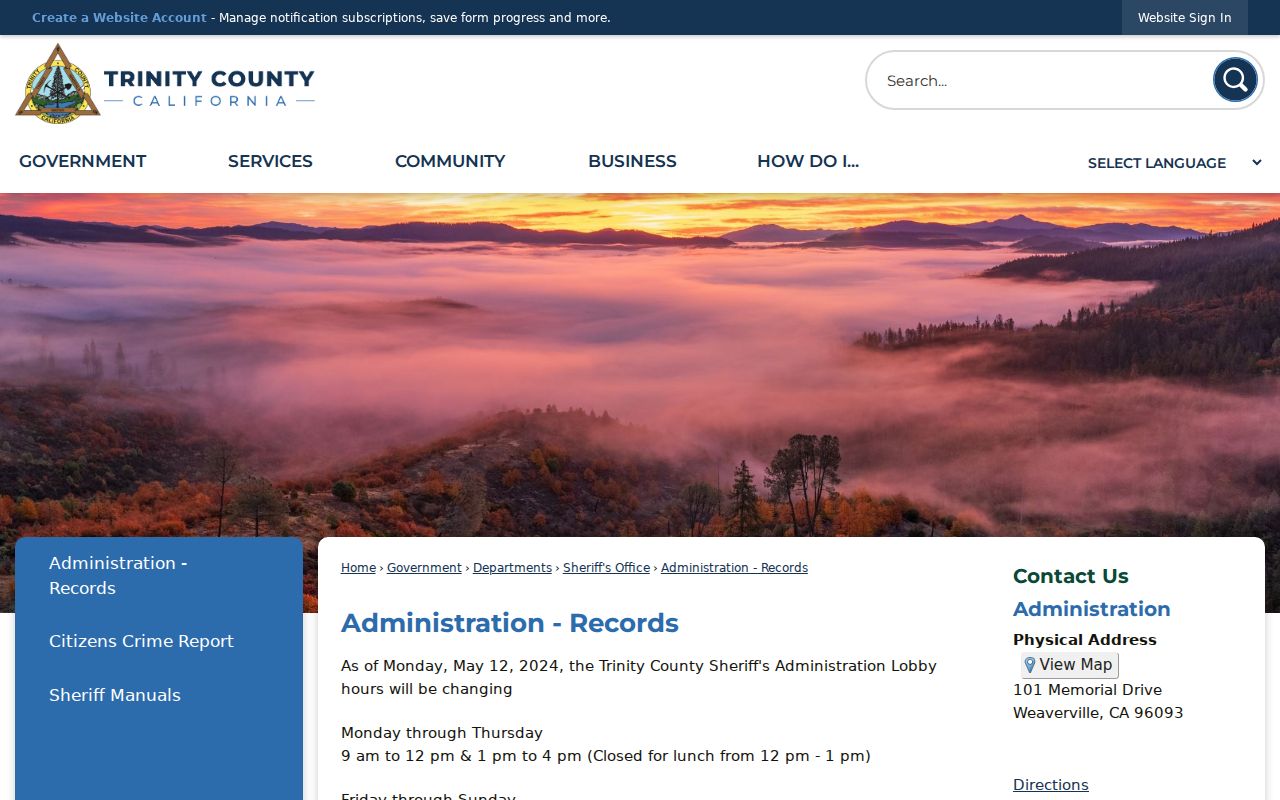
This office page confirms the access hours and appointment channel that replace an online county record search.
Criminal Record Types
Trinity County criminal records form at different points. An investigating agency writes an incident or arrest report. The jail creates booking and custody entries if a person is admitted. The District Attorney reviews the agency report and decides whether to file a charge. Trinity Superior Court then creates a case file with pleadings, hearings, rulings, and the outcome. Fingerprint data and dispositions may also reach DOJ.
- Agency records: calls, incident facts, arrest details, and related reports held by the investigating office.
- Booking records: jail intake identifiers, charges at booking, custody, bond, and release data when public.
- Court files: filed charges, appearances, pleas, motions, disposition, sentence, and public documents.
- Repository records: fingerprint-based arrest cycles and dispositions maintained under restricted state law.
- Supervision records: county probation or state parole status, with access limits based on the record.
Trinity Court Is the Case Hub
Trinity Superior Court at 11 Court Street in Weaverville handles felony and misdemeanor criminal matters. Court Services can be reached at 530-623-1208 or courtclerks@trinitycounty.org. The court warns that email is not a safe way to handle a deadline. A person remains responsible for appearing, filing, or paying on time. Public-record requests to court administration must be mailed to Trinity Superior Court, Attn: Administration, PO Box 1258, Weaverville, CA 96093, rather than sent through the website contact form.
The Trinity Superior Court website identifies the official court channel.
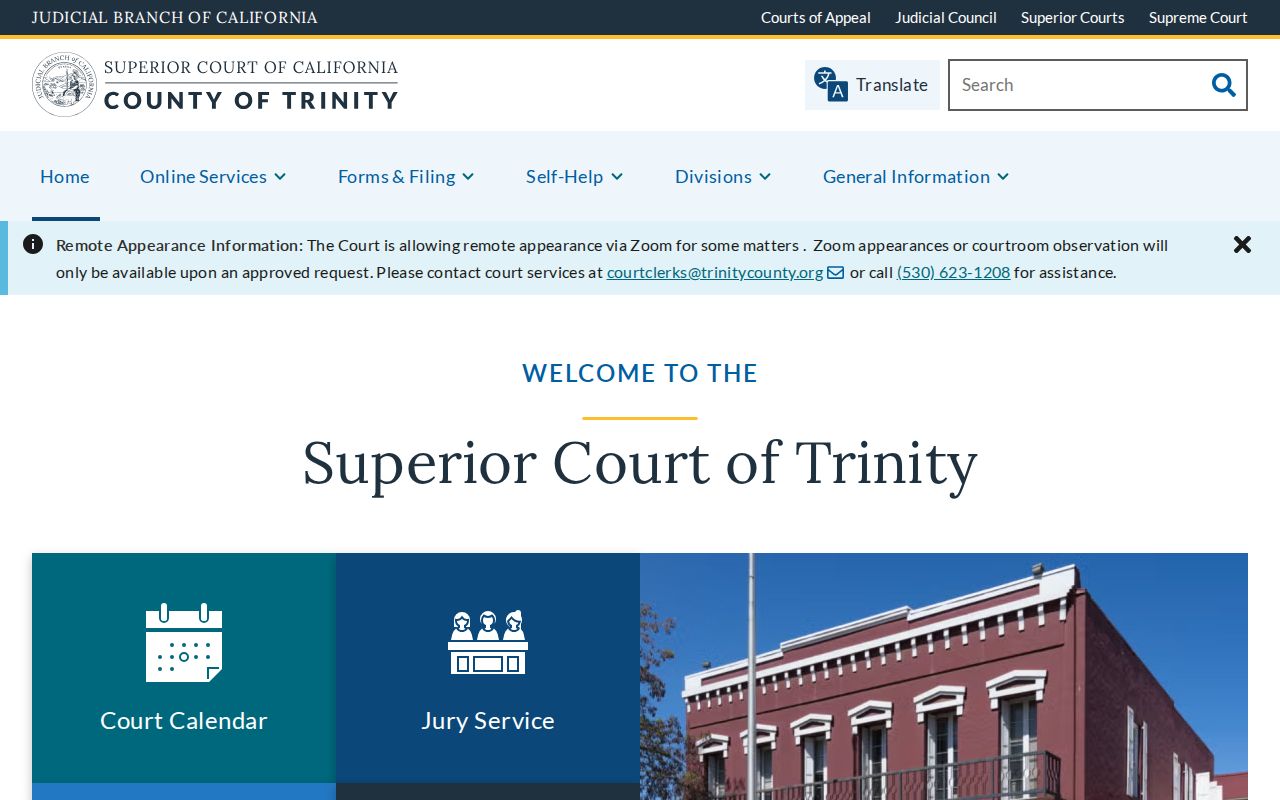
The court site links the criminal division, calendars, forms, and contact details, but it does not provide a public criminal name-search portal.
The criminal division page explains appearance and bench-warrant concerns.
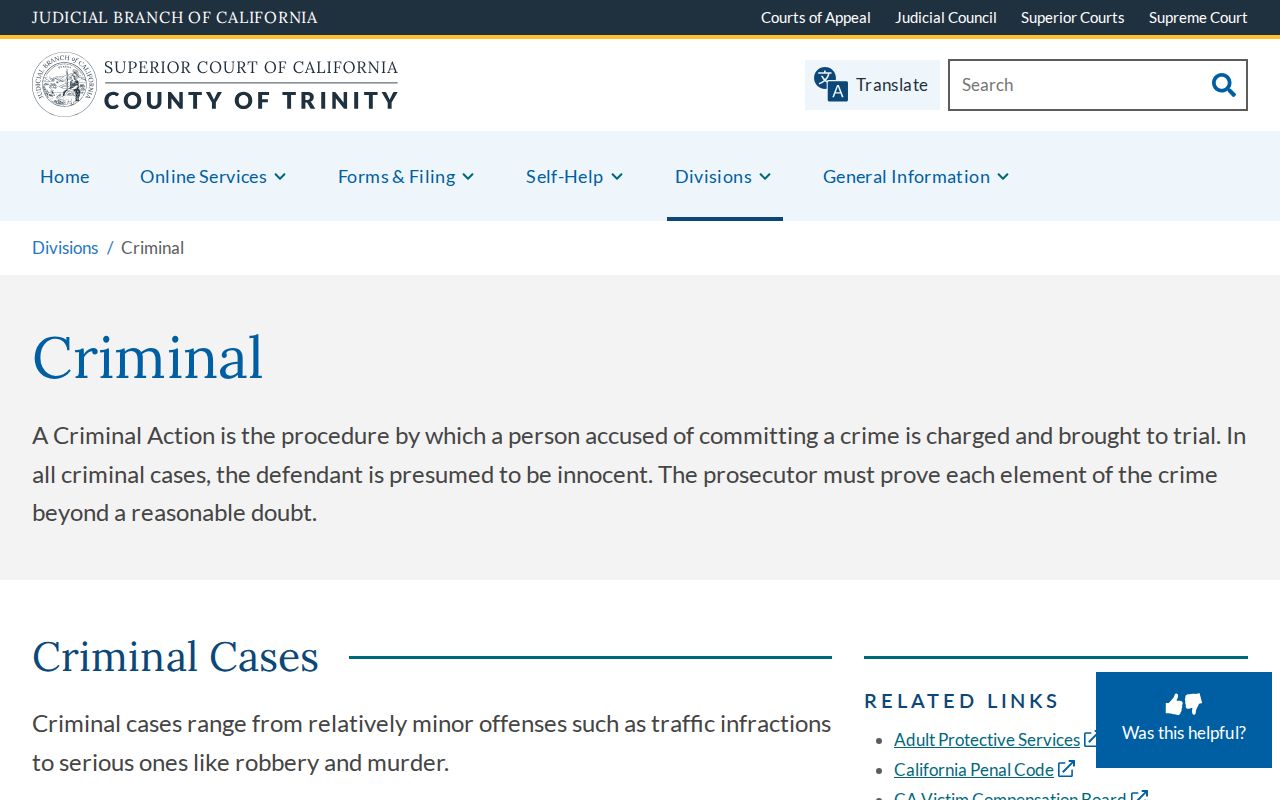
Those instructions make the clerk, not a third-party database, the right source for case dates and filed outcomes.
Trinity Court Contact Rules
The court's location page is the best source for hours, clerk contact details, and the special mail route for public-record requests. It also warns against emailing judicial officers and against treating email as a way to extend a legal deadline. Court Services is open from 8 a.m. to 4 p.m. on weekdays.
The court location and contact page states those limits.
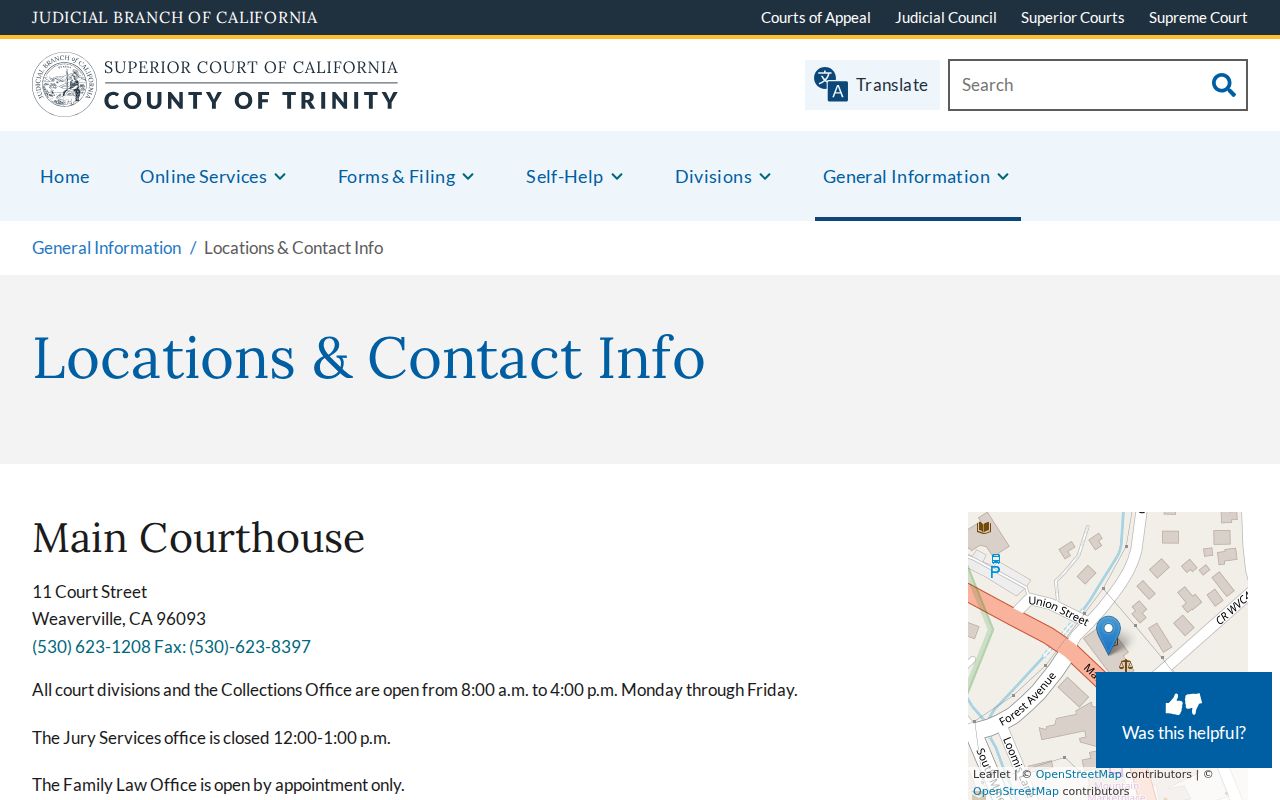
Following the stated mail and counter routes helps a request reach court administration instead of a general website inbox.
Inside a Trinity County Criminal Record
The fields depend on the record family. Penal Code section 11105 describes the state summary record broadly, but it is not a public name-search file. A local court document or sheriff report may show only the facts created by that office. Compare the name and date of birth, then check the agency, number, charge date, and outcome rather than treating one matching name as proof.
| Name and identifiers | Legal name, aliases, date of birth, physical details, or fingerprints where lawfully maintained. |
|---|---|
| Arrest and booking | Arrest date, agency, booking number, initial charge, and custody or release information. |
| Charges | Statute and description alleged by the agency or later filed by the prosecutor. |
| Disposition | Pending, dismissed, acquitted, or conviction outcome for each filed count. |
| Sentence | Custody, probation, restitution, fines, or other court orders after conviction. |
| Supervision | County probation, state parole, or postrelease supervision when applicable. |
Trinity Jail, VINE, and CIRIS
Three custody channels answer different questions. The Trinity County Correctional Facility at 701 Tom Bell Road holds local inmates before arraignment, during trial, and after some sentences. Call 530-623-8124 for facility questions. No official public county jail roster was found. California VINE, linked by the sheriff, is a notification channel for custody changes. CIRIS is the CDCR locator for people in state prison, not a source for a recent county booking.
The official CIRIS locator shows the statewide custody channel.
Using CIRIS only after confirming the custody level avoids confusing the county jail with the California prison system.
Trinity Live Scan Record Review
For a self-review, download BCIA 8016RR from DOJ, complete the personal fields, mark Record Review in the two required purpose fields, and bring the form to an approved Live Scan provider. The sheriff's appointment service is a local option. DOJ charges $25 to process the record review unless a waiver applies; the rolling fee varies by site. This process relies on fingerprints, not a name alone.
The California DOJ instructions show the state process.
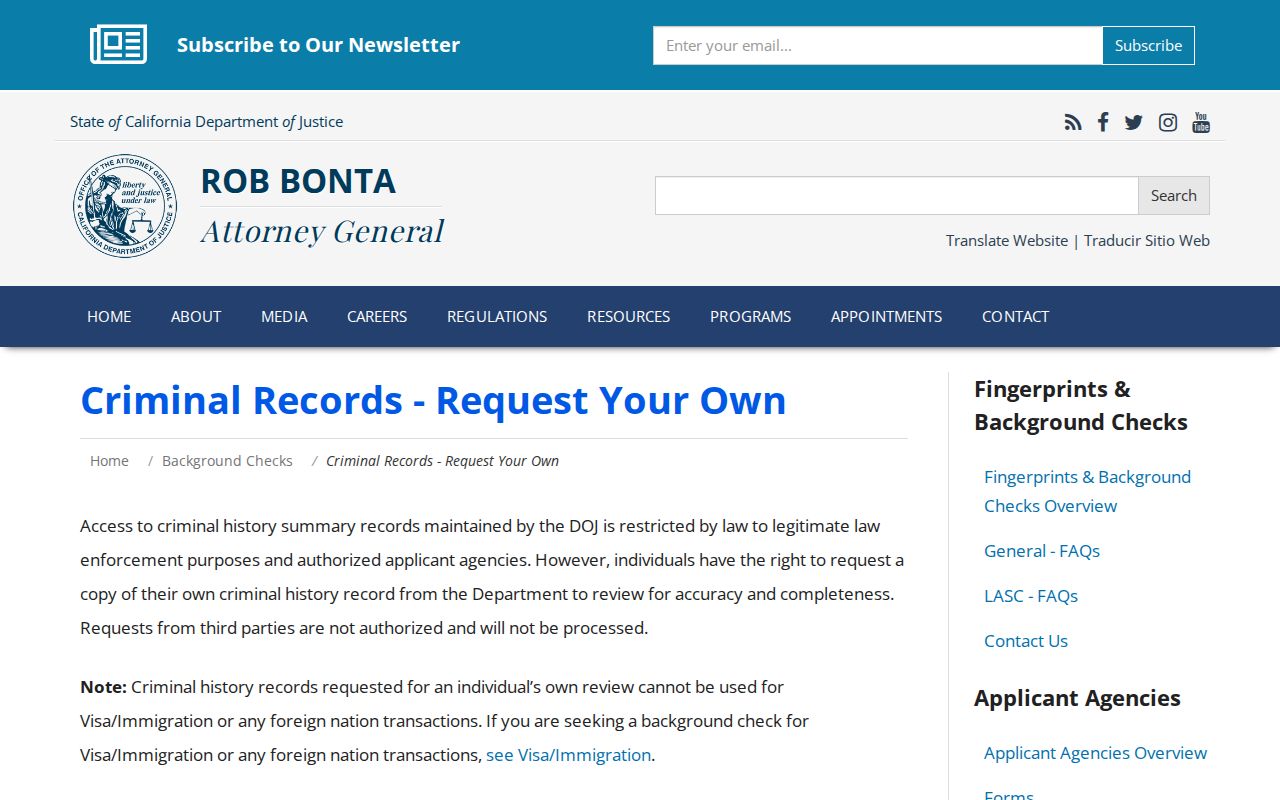
The instructions also explain how to challenge an incomplete or inaccurate entry after reviewing the returned record.
Public Access Laws in California
The California Public Records Act governs many state and local agency records, subject to exemptions and redaction. Court records follow judicial access rules, while DOJ summary criminal history has tighter dissemination limits. Juvenile information, victim data, sealed material, and active-investigation facts may be restricted. Public access therefore depends on both the custodian and the kind of information requested.
Key laws and rules:
Government Code section 7920.000 et seq. establishes the California Public Records Act framework.
Penal Code section 11105 limits disclosure of state summary criminal history.
California Rule of Court 2.507 governs electronic calendars, indexes, and registers of actions.
Penal Code section 1203.4 provides dismissal relief for some eligible convictions.
Penal Code section 290.46 controls Megan's Law disclosure and misuse.
Trinity Warrants and Scam Calls
A bench warrant may issue after a missed court date. The District Attorney FAQ directs felony warrant questions toward counsel, the Court Services walk-in calendar, or reporting to the jail for booking and processing. Call Court Services before acting on an old or unclear case. Sheriff scam notices add a vital warning: callers have impersonated deputies and demanded payment for supposed warrants or missed jury service. The Sheriff's Office says deputies do not demand payment by phone. End the call and contact the official office number independently.
The sheriff's official page shows the agency's verified contact route.
That verified number is safer than any callback number supplied by an unexpected caller.
Sealed, Expunged, and Restricted Records
California often uses “expungement” for relief under Penal Code section 1203.4, but the remedy is a dismissal rather than erasure. An eligible person may withdraw a plea or have a verdict set aside and the accusation dismissed after completing the required terms. The Trinity court publishes a petition dismissal packet. Eligibility and the legal effect depend on the case, so the packet and court clerk are the sound starting points.
Sealing and automatic relief can limit public access to other eligible records. Juvenile files, confidential repository information, and protected victim details follow separate rules. Even after a dismissal, some government and licensing disclosures can remain, and the underlying history is not rewritten as though the case never occurred.
Trinity Probation and State Parole
Trinity County Probation Department runs local adult and juvenile supervision from 333 Tom Bell Road in Weaverville. Its public hours are Monday through Friday, 9 a.m. to noon and 1 p.m. to 4 p.m.; the phone is 530-623-1204. California parole is different. CDCR's Division of Adult Parole Operations handles state supervision, while the Board of Parole Hearings has a separate decision-making role. A court case may name probation terms, but detailed supervision material can be restricted.
These distinctions matter because a jail release, probation term, and parole status describe different legal stages. Confirm each through the office that maintains it.
Trinity Megan's Law Boundaries
The California Megan's Law Website is a public safety registry, not a full criminal-history database. It discloses specified registrants and offers searches by place and name after the user accepts legal terms. Not every person required to register appears publicly, and a possible match requires careful identity checks. Information may be incomplete or change after local law enforcement submits an update.
The official Megan's Law Website is the proper search source.
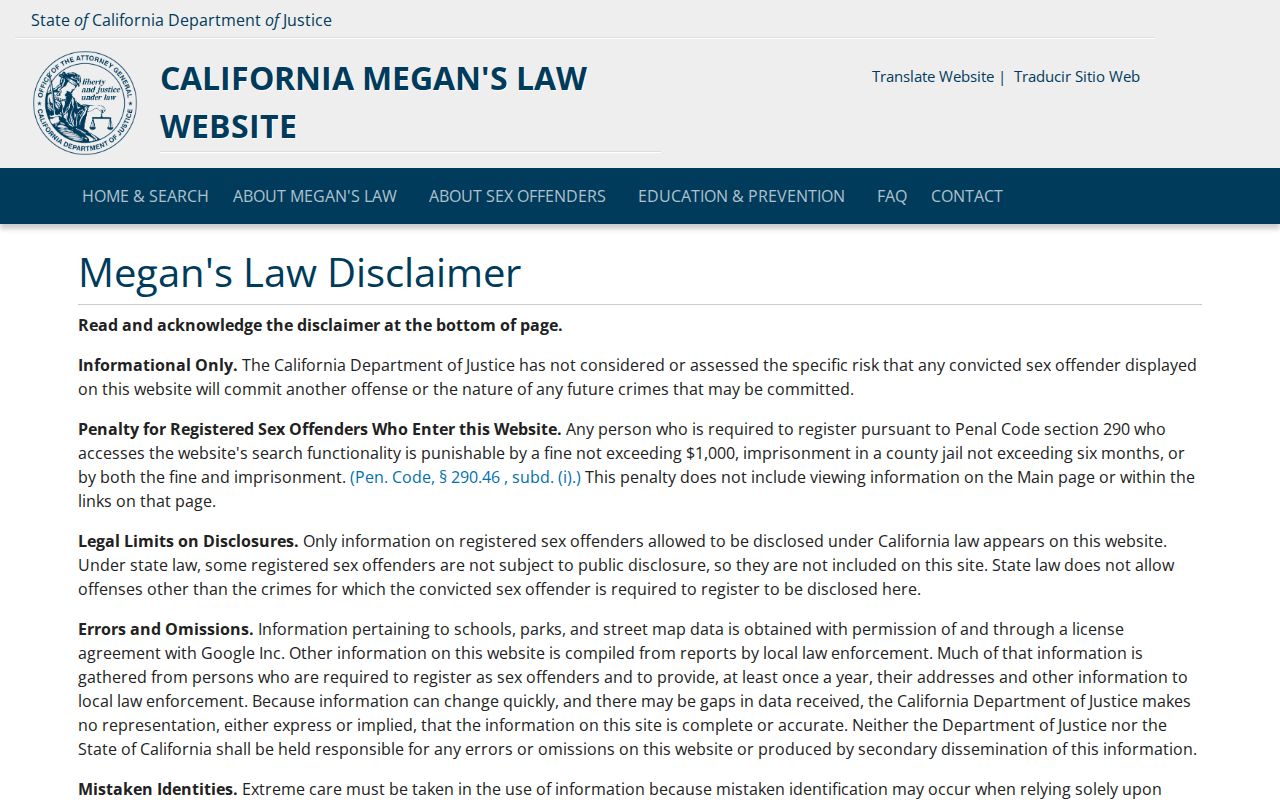
Use its information only for protection and awareness; Penal Code section 290.46 prohibits harassment and other misuse.
Trinity Cases From Rural Agencies
The Trinity District Attorney receives reports from more than the sheriff. California Highway Patrol, the U.S. Forest Service, CalFire, California Department of Fish and Wildlife, and social-service investigators may send cases for review. An incident on federal forest land may be referred away from the county path. That is why the arresting or investigating agency name matters when requesting an incident report.
The District Attorney FAQ documents the lack of online criminal records and the referral process.
The agency split explains why one local office may have no report even when the related court case is filed in Trinity County.
Trinity County Has No City Records
Trinity County has no incorporated cities. Weaverville, Hayfork, and Lewiston are census-designated communities, not cities with police departments or municipal courts. The county structure controls: the sheriff and other rural agencies create reports, the correctional facility handles local bookings, and Trinity Superior Court holds filed adult criminal cases. No city-guide pages are built because the project rules prohibit substituting unincorporated places for incorporated cities.
Residents of those communities use the same countywide channels. Sheriff Records handles local agency paperwork, the correctional facility answers current custody questions, and the Superior Court clerk checks filed criminal cases. The place name can help staff locate an incident, but it does not create a separate city custodian, police record system, or municipal case file.